


Behind the SEO Strategies We Use for SaaS, PaaS, and IaaS Companies
Discover SEO strategies for SaaS, PaaS, and IaaS companies to improve visibility, drive traffic, boost growth in competitive markets.

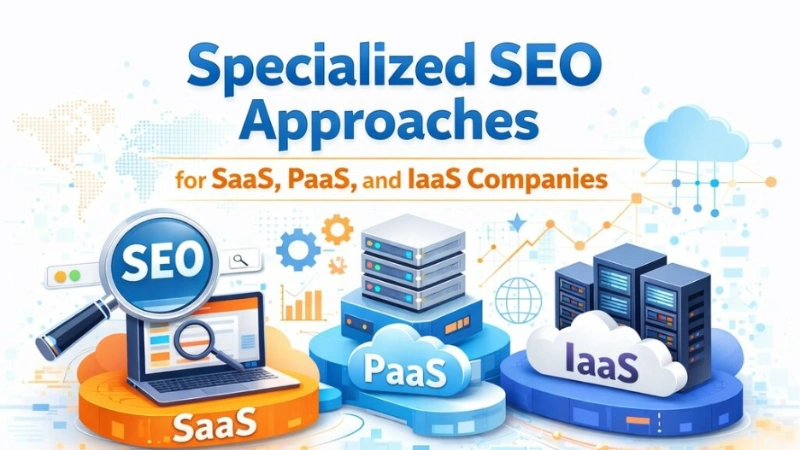
The fundamentals of SEO have not disappeared, but the way they work has changed. Search engines no longer just rank pages. They now understand topics, summarize answers, and decide which pages are worth showing. Because of this, many tactics that worked even 5 years ago are less effective today, especially in competitive B2B tech niches.
This is especially true for SaaS, PaaS, and IaaS companies. Their websites often include hundreds or even thousands of similar pages, overlapping use cases, and complex product structures. In these cases, SEO success depends less on volume and more on clarity, differentiation, and consistency across the site.
Let’s review the most useful and relevant SEO tips for tech companies!
Technical SEO Analysis of the Site
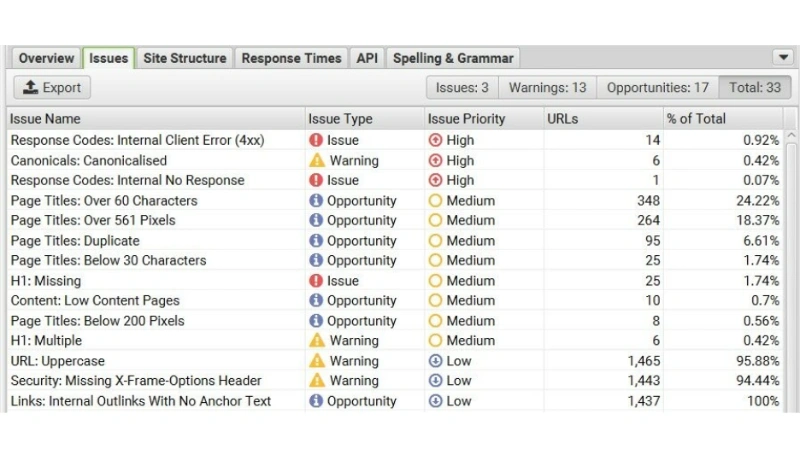
Technical analysis allows you to identify implicit problems, errors in the code, site structure, linking, duplicate content, or meta tags, and to find unoptimized or broken pages. A technical audit is the most important stage of site promotion. It should be one of the first, and it should be repeated periodically, analyzing the results of all stages of promotion.
At the same time, technical SEO today is not only about fixing errors. Especially when search engines became more selective about what they crawl and index on large SaaS websites. Therefore, it is important to control page indexing, reduce duplicate content, and provide key pages with strong internal links and enough authority signals.
Modern SaaS platforms also rely heavily on JavaScript, which means rendering and crawlability should be reviewed as part of every audit.
???? Example: HubSpot
HubSpot improved organic performance by consolidating overlapping content and strengthening internal linking across topic clusters. This reduced index bloat and helped key pages rank more consistently.
Competitors and Niche SEO Analysis for Tech Companies
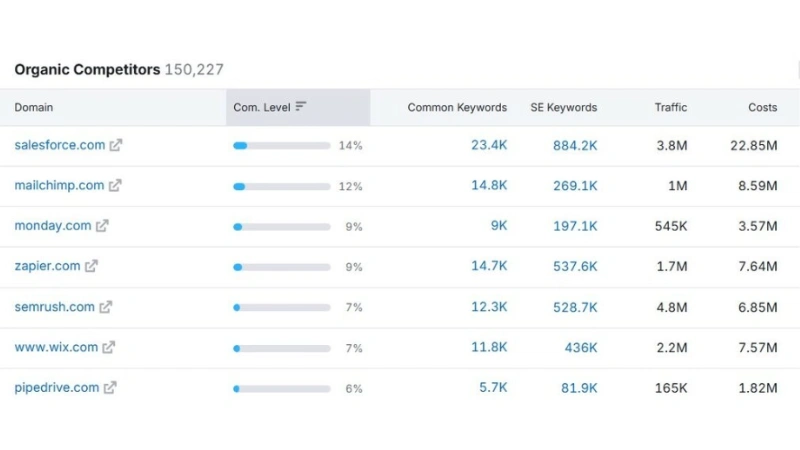
Analysis of the current state of the market is the starting point for the development of your business. Without this stage, there is a risk of investing money, time, and effort in something that turns out to be unclaimed.
However, competitor analysis for SaaS companies focuses not only on rankings. It is more about where competitors capture high-intent traffic from: through comparison pages, integration pages or review platforms.
This helps identify opportunities that are closer to conversion rather than just traffic growth.
???? Example: Ahrefs
Ahrefs ranks for high-intent queries like “Ahrefs alternatives” and “SEO tools comparison,” capturing users who are already evaluating solutions and are close to conversion.
Keyword Analysis, Semantic Research
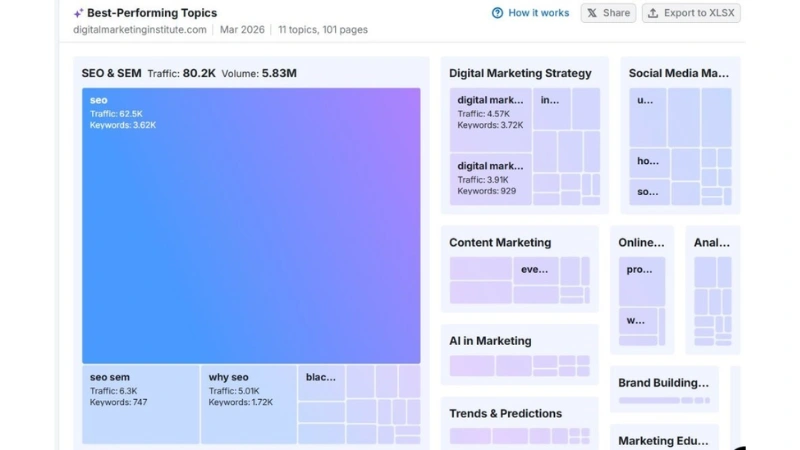
The semantic core is a database of keywords and phrases that users enter into search engines when searching for relevant information or products. In terms of business, the semantics of the site is a set of phrases that are used to promote sites.
Today, this approach should be expanded beyond keywords into intent and topic coverage. For SaaS, PaaS, and IaaS companies, high-intent queries often bring more value than high-volume keywords.
These include comparison queries, feature-based searches, and integration-related queries.
???? Example: Zapier
Zapier created thousands of pages targeting “[Tool A] + [Tool B] integration” queries. These pages capture very specific intent and drive consistent, qualified traffic.
Uploading SEO-optimized Content Describing Company Products and Services
In addition to the formation of a general list of keywords and their grouping, it is also required to work with additional supporting terms that help search engines better understand the topic.
Our specialists create technical tasks for writing optimized content, which can reach top positions for relevant queries.
At the same time, content should not only target keywords but also clearly demonstrate how the product solves a problem. For SaaS companies, product-led content is more effective than generic articles.
???? Example: Notion
Notion uses tutorials and templates to demonstrate how the product works directly within the content, introducing the product early instead of leaving it for the end.
Building a Thorough SEO Content Strategy
Using our successful experience in the promotion of IT businesses, we form a strategy for maximum results in SEO.
A strong SEO content strategy today should connect all pages into a single system. Instead of creating isolated content, it is more effective to build topic clusters where each page supports the main topic.
This approach aligns with the methodology described in the Rankability article on driving B2B content marketing results in 2026, where content is treated as a structured ecosystem rather than individual pages.
???? Example: Shopify
Shopify built a hub-and-spoke content structure around eCommerce topics, combining guides, tools, and landing pages to dominate multiple stages of the customer journey.
SEO for B2B Tech Companies – Is it different from B2C?
The IT sector is growing strongly each year. Many IT Companies manage to resist the crisis, some with innovative methods, some with Internet advertising, but few realize that by investing in professional SEO services for tech companies, they can permanently increase their revenues through customers who come through Google search.
All B2B Tech Companies without their own site can no longer be found. Nevertheless, not all B2B Tech Companies can provide a site that is ready to be promoted. This applies both to its structure, completeness, and literacy of the text content, and SEO optimization.
For SaaS, PaaS, and IaaS companies, this challenge is even more complex due to technical products and longer decision cycles. This requires deeper content, better structure, and stronger internal linking.
???? Example: Cloudflare
Cloudflare generates strong organic traffic through technical content and documentation that targets developers and IT professionals with detailed explanations.
SEO Tips for B2B Tech Companies. Brief SEO Checklist
| Task | Status |
| Detailed site audit | ✅ |
| Analysis of the semantics | ✅ |
| Grouping of keywords | ✅ |
| Audit of main competitors | ✅ |
| Technical audit of the site | ✅ |
| Technical optimization | ✅ |
| Site structure analysis and improvement | ✅ |
| Analysis of queries on Google | ✅ |
| Competitor Research | ✅ |
| Backlink strategy | ✅ |
| Meta-data optimization | ✅ |
| Search Console setup | ✅ |
| Internal relinking of the site | ✅ |
| Robots.txt Setup | ✅ |
| Validation of the sitemap | ✅ |
| Schema Markup | ✅ |
| Improving landing pages | ✅ |
| Optimizing site performance and speed | ✅ |
| Content optimization | ✅ |
| SEO Content plan | ✅ |
| SEO Content writing | ✅ |
These steps remain relevant, but for SaaS companies, it is also important to include high-intent keyword targeting, integration pages, and scalable content strategies.
???? Example: Capterra
Capterra ranks for thousands of high-intent queries using structured category pages, filters, and user-generated content, capturing users ready to choose software.
AI Search Optimization (AEO)
Search behavior is changing quickly with the growth of AI-powered tools. Platforms like ChatGPT, Perplexity AI, and Google Gemini no longer rely only on traditional rankings. Instead, they generate direct answers based on trusted, structured content.
This means SEO is no longer just about appearing in search results — it is also about being selected as a source in AI-generated responses.
To adapt to this shift, content should be structured in a way that makes it easy to extract, understand, and cite.
Key AEO Approaches
- Answer Engine Optimization (AEO)
Structure content to directly answer questions in a clear and concise way. Use short paragraphs, direct answers, and well-defined sections so AI tools can easily identify key information. - Entity Optimization
Use semantic SEO to clearly define entities (products, features, concepts) and their relationships. This helps align content with Google’s Knowledge Graph and improves trust signals. - Structured Content Formatting
Use headings, FAQs, and consistent formatting to make content easier to parse for both search engines and AI systems. - Topical Authority Signals
Cover topics in depth across multiple pages. AI systems are more likely to reference sources that demonstrate consistent expertise.
AI search does not replace traditional SEO, but it changes how visibility works. Pages that are clear, structured, and focused on answering real questions are more likely to be referenced.
???? Example: Stripe
Stripe structures its documentation and product pages with clear explanations, definitions, and examples. This makes the content easy to extract and increases its chances of being referenced in AI-generated answers.
Step-by-Step SEO Process
- Carry out a technical analysis of the site
Check whether the site meets the requirements of Google and identify technical errors. Use tools such as Screaming Frog SEO Spider.
- Prepare a detailed tech guide for developers
If errors are identified, prepare clear instructions for fixing them and verify implementation.
- Carry out a thorough semantic analysis
Collect keywords based on the site structure and determine growth opportunities.
- Make a detailed SEO strategy broken into phases
Work out a full SEO strategy, including backlink development.
- Analyze competitors and their SEO techniques
Study competitor strategies and identify what helped them reach top positions.
- Execute external optimization
For PaaS and IaaS companies specifically, this also means building visibility through tools that developers already rely on. Platforms like AI image generation API give engineering teams a production-ready way to ship image features without managing GPU infrastructure — making them a natural fit as a technical reference in any backlink strategy
- Carry out monthly and quarterly analysis
Prepare reports and review performance regularly.
- Identify reasons for traffic growth or decline
Analyze performance changes and understand their causes.
- Adjust your SEO strategy
Continuously refine your approach based on results.
- Always look for new SEO opportunities
SEO is an ongoing process, and growth comes from continuous improvements.
SEO Leaders by Model (SaaS / PaaS / IaaS)
SaaS SEO Leaders
| Company | Website | Key SEO Strategy | SEO Achievement |
| HubSpot | hubspot.com | Topic clusters + inbound content | Built one of the largest B2B blogs; major driver of leads |
| Ahrefs | ahrefs.com | Product-led + data-driven content | Scaled authority via high-quality SEO content and tools |
| Zapier | zapier.com | Programmatic SEO (integrations) | ~1.6M monthly organic visits from SEO content |
| Canva | canva.com | Topic coverage + templates | Massive keyword footprint across design-related queries |
| Monday.com | monday.com | Scaled content production | Large-scale SEO content strategy driving traffic & growth |
PaaS SEO Leaders
| Company | Website | Key SEO Strategy | SEO Achievement |
| Twilio | twilio.com | Developer-focused content + docs | Strong visibility via API documentation and use cases |
| Firebase | firebase.google.com | Technical documentation SEO | High rankings for app development queries |
| Heroku | heroku.com | Use-case + developer content | Captures long-tail developer queries |
| Vercel | vercel.com | Framework + developer SEO | Ranks for modern frontend and deployment queries |
| Netlify | netlify.com | Jamstack ecosystem content | Strong presence in the developer search niche |
IaaS SEO Leaders
| Company | Website | Key SEO Strategy | SEO Achievement |
| AWS | aws.amazon.com | Massive documentation + landing pages | Dominates cloud infrastructure queries globally |
| Microsoft Azure | azure.microsoft.com | Enterprise + technical SEO | Strong rankings across enterprise cloud queries |
| Google Cloud | cloud.google.com | Structured docs + product pages | High visibility in cloud and AI-related searches |
| DigitalOcean | digitalocean.com | Tutorial-based SEO | Large organic traffic via developer tutorials |
| Cloudflare | cloudflare.com | Educational + technical content | Strong SEO through the learning center and docs |
Key Takeaway
SEO is a long-term strategy that requires continuous work and improvement. For SaaS, PaaS, and IaaS companies, success depends on attracting the right audience and converting that traffic into real business results.
This means focusing not only on rankings but also on user intent, content quality, and technical structure.

