


How Do Smart Manufacturing Systems Achieve Better Product Integration?
Smart manufacturing uses real-time IoT data, digital twins, and automated testing to achieve seamless product integration with fewer defects

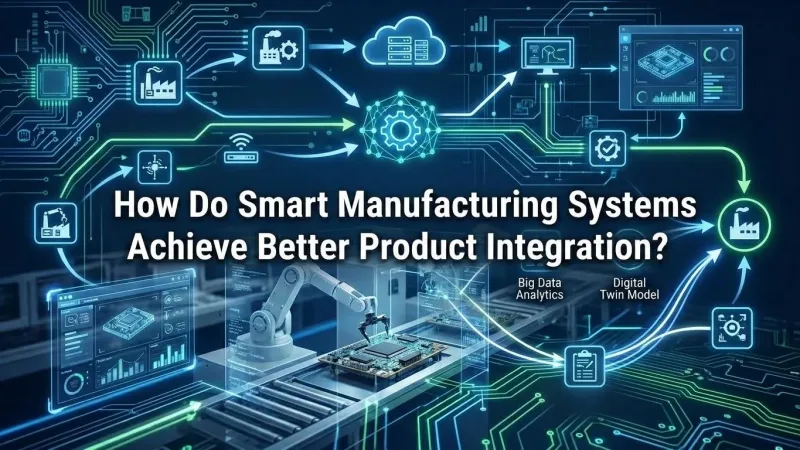
Visit any contemporary factory floor nowadays and what will you see? The machines are not only running, but also talking to one another. The data is being fed upstream by sensors. Robots are also adapting their movements according to real time inputs. Before a defect is visible, assembly lines are self correcting. It is not a science fiction story. It’s smart manufacturing, and at its core is one of the most important capabilities it brings to the table: seamless product integration.
However, what is the meaning of product integration in this case and why is it so crucial? Breaking it down in plain terms, let us.
What Product Integration Is All About
In manufacturing, product integration is the degree to which various components, subsystems and processes are integrated to create a completed product, reliably, efficiently and at scale. It’s not just about assembling parts. It is all about making sure that:
- All the parts are communicating with each other.
- They will work like expected as a part of the bigger system.
- They can be tracked and verified during the production lifecycle.
Lack of proper integration causes expensive re-work, field failures and headaches in the supply chain. Innovative production processes address it at each production phase.
Real Time Data as the Backbone
Among the largest changes, the transition to proactive instead of reactive decision making is one of the largest changes offered by smart manufacturing. The usual production lines usually found integration issues as they arose during quality checks or even after the products were shipped. Intelligent systems reverse this all.
Machines gather data on a continuous basis through Industrial IoT (IIoT) sensors.
- When a component does not fit into tolerance, the system notifies it instantly.
- In case a process slips by a small margin compared to the baseline, then an alert will be raised and a batch will not be impacted.
It is this real time visibility which forms the basis of enhanced integration since it completes the feedback loop which can never be matched by manual inspection in speed or consistency.
Digital Twins: Testing Before You Build
Think of running a complete simulation of your product and not even so much as a single physical part is produced. This is what digital twin technology facilitates. A digital twin is a computer simulation of a product or a manufacturing process, and intelligent manufacturers rely heavily on them to assess how the components of an object are going to assemble without committing themselves to manufacturing.
The engineers are able to model stress points, test the interactions between electrical systems and mechanical assemblies, and discover possible failure modes all in a virtual world. Integration risks are identified and resolved by the time the manufacturing process is started. This radically cuts down the number of surprises in the actual production floor.
Electronics Integration: The Role of PCB Assembly
Modern goods, such as medical equipment, automotive control units, and others, are heavily based on advanced electronics. There is no compromise on this. A properly developed PCB assembly solution will help make sure that circuit boards are:
- Produced to specifications.
- Subjected to rigorous testing.
- Incorporated into the overall product without causing signal interference or reliability problems.
Smart manufacturing systems can augment this process by using automated optical inspection (AOI), X-ray inspection and in circuit testing which are able to identify defects that cannot be seen by the naked eye. The outcome is a degree of accuracy and traceability that facilitates improved integration overall of the product, especially as electronics continue to get smaller and more sophisticated.
Connectivity Within the Product: Wiring and Harness Design
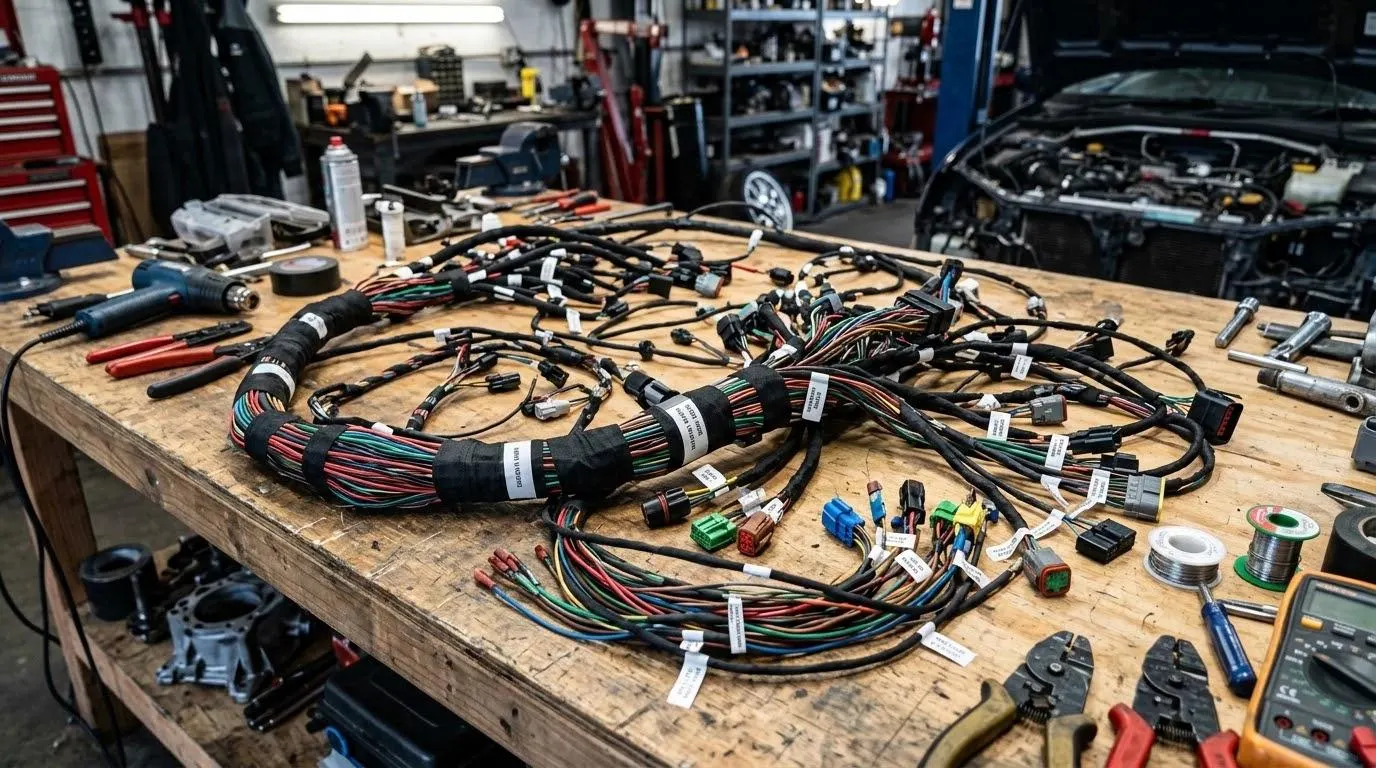
Electronics do not work alone; they require connecting with other systems via physical connections. This involves the handling of hundreds or even thousands of individual wires and connectors in fields such as aerospace, automotive and heavy machinery. An ill-designed harness may lead to electromagnetic interference or loss of signal or mechanical failure during vibration.
It is at this point that the investment in good wiring harness solutions will be highly rewarded. Smart manufacturing methods to harness design include:
- Digitally directed assembly workstations that guide technicians through every connection step.
- Automated testing stations that test continuity and resistance through each circuit.
- 3D-modeled designs that assure routing efficiency prior to assembly.
These harnesses are integrated seamlessly into the larger product, and much easier to diagnose in the event that anything does go wrong.
Visibility of the Supply Chain and Traceability of Components
It is not the arrival of parts in the factory floor that initiates integration but rather the origin of the parts. Smart manufacturing systems enhance supply chain visibility through interconnected platforms and BOM software, covering component origins, batch numbers, certification records, and other product information.
This is very crucial where there are problems of integration. When a product malfunctions in the field, manufacturers are able to trace the issue to:
- A batch of suppliers.
- A shift in the assembly process.
- A process that was out of the spec on a particular date.
Such traceability condenses weeks of root cause analysis in hours.
Human Machine Collaboration
It is important to note that smart manufacturing does not remove the human factor but enhances it. The operators who are going to operate with collaborative robots (cobots) enjoy the advantages of augmented reality overlays that guide the assembly process, indicate possible integration gaps and offer feedback in real time. Technicians are more informed, they are less prone to error and they are able to detect integration problems before they get out of control.
This human machine cooperation is especially useful in complex assemblies to which judgment, dexterity, and experience remain superior in comparison with automation.
Making It All Together
Smart manufacturing systems are more integrated with the product because they see the whole production process as an ecosystem where data is divided into various parts, instead of a sequence of steps. From the digital design and simulation to the electronics assembly, harness routing and final testing, all aspects are informed by real time information, directed by smart systems and checked by extensive traceability.
The end product is not merely one that has been assembled properly, but one that is comprehended, all the way down to the last wire, the solder joint, or data point that has been gathered in the process. To manufacturers who are prepared to accept these systems, the rewards are:
- Reduced defect levels.
- Reduced time-to-market.
- Products that work as intended when they reach the individuals who require them.
That is no big thing. It may simply be everything in a world where complexity continues to grow and margins to error continue to become smaller.

