

The Future of Decentralized Drone Networks: Opportunities and Technical Challenges
Explore decentralized drone networks, their business opportunities, key benefits, and technical challenges shaping the future of drone tech

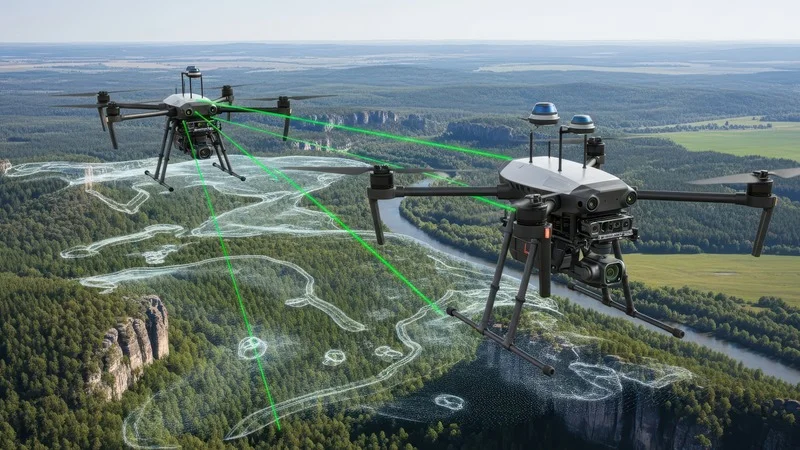
Commercial drones are evolving from individually controlled aircraft into connected systems capable of coordinating missions, exchanging information, and supporting complex business operations. Industries such as logistics, agriculture, energy, and infrastructure inspection increasingly depend on UAV technology to collect data and automate activities that once required extensive manual effort.
As drone fleets expand, centralized management platforms face growing demands involving connectivity, security, data ownership, and coordination between independent organizations. These challenges have encouraged interest in decentralized technologies, including blockchain, distributed computing, and digital identity systems.
Businesses exploring this direction may benefit from custom drone software development services that combine conventional UAV infrastructure with emerging decentralized technologies. Engineering teams such as Wezom can design tailored architectures that connect drone operations, secure data exchange, and enterprise applications without relying entirely on experimental systems.
Decentralized drone networks remain an emerging concept rather than an established industry standard. Nevertheless, understanding their potential applications and limitations can help businesses evaluate where distributed technologies might create meaningful operational advantages.
Why Traditional Drone Networks Face New Challenges
Most commercial drone platforms rely on centralized infrastructure to manage missions, collect telemetry, store information, and coordinate operators.
This architecture is practical for many applications. Centralized systems provide consistent management, established security controls, and relatively straightforward integration with business software.
However, new challenges emerge when multiple organizations operate connected drone fleets.
For example, an infrastructure company may employ several independent inspection providers. Each operator might use different equipment, cloud platforms, and reporting systems.
Coordinating information across these environments can introduce problems involving data compatibility, access permissions, and record verification.
Common challenges include:
- Fragmented data ownership: Information may be distributed across multiple service providers.
- Limited interoperability: Different platforms may use incompatible communication protocols.
- Centralized dependencies: Certain services may become unavailable when a central system fails.
- Trust between participants: Independent organizations may need verifiable operational records.
- Security management: Connected aircraft and supporting systems create additional attack surfaces.
Decentralized architectures may address selected aspects of these problems, although they also introduce new technical responsibilities.
What Makes a Drone Network Decentralized?
A decentralized drone network distributes selected responsibilities across multiple systems or participants instead of relying on a single controlling platform.
However, decentralization can take several forms.
A network may distribute data processing across edge devices, allow independent organizations to maintain shared records, or use federated services to coordinate operations.
Blockchain represents only one possible component.
Distributed Computing and Edge Processing
Traditional drone platforms frequently transmit collected information to cloud servers for analysis.
Edge computing moves selected processing tasks closer to the aircraft or ground infrastructure.
For example, a drone inspecting industrial equipment might process imagery locally to identify potential anomalies before uploading relevant results.
This can reduce bandwidth requirements and support faster responses.
However, onboard processing remains constrained by hardware capacity, power consumption, and environmental conditions.
Blockchain-Based Recordkeeping
Blockchain can provide a shared, tamper-evident record of selected events.
In a multi-operator drone network, participants might register mission approvals, data transfers, or inspection completion records.
This approach could improve accountability when organizations need independent verification.
It does not mean that aircraft should continuously exchange flight-control instructions through a blockchain.
Real-time navigation requires communication and processing characteristics that conventional blockchain networks generally cannot provide.
How Blockchain Could Support Trust Between Drone Operators
One of the most promising applications of decentralized technology involves cooperation between organizations that do not share a single administrative system.
Consider a utility company working with several drone inspection contractors.
Each contractor collects information using its own aircraft and software. The utility must then verify that submitted records correspond to authorized missions and have not been modified after delivery.
A blockchain-supported platform could record cryptographic hashes associated with inspection files and mission reports.
When the utility receives a document, its software can compare the file’s hash with the registered value.
This helps detect modifications, although it does not independently establish that the original data was accurate.
Potential business applications include:
| Application | Potential Value |
|---|---|
| Mission verification | Shared records of authorized and completed activities |
| Data provenance | Evidence linking files to registered collection events |
| Contractor coordination | Consistent records across independent organizations |
| Digital asset licensing | Traceable permissions for selected datasets |
| Audit documentation | Verifiable histories of important operational events |
The business case becomes stronger when several parties need access to common records but do not want one participant to control the entire history.
For operations managed by a single trusted organization, conventional databases and digital signatures may be more economical.
Decentralized Identity for Connected UAV Ecosystems
Identity management is another area where distributed technologies may offer benefits.
Commercial drone networks involve aircraft, operators, service providers, ground stations, and software applications.
Each participant requires appropriate authentication and authorization.
Traditional systems usually rely on centrally managed accounts and device credentials.
Decentralized identity models introduce the possibility of using cryptographically verifiable credentials that can be checked across organizational boundaries.
Verifying Devices and Operators
A participating organization could issue credentials confirming that an aircraft belongs to an approved fleet or that an operator holds a particular authorization.
Other systems could verify those credentials without requiring direct access to the issuing organization’s internal user database.
This may simplify cooperation between independent service providers.
However, credential verification does not replace aviation compliance checks, secure device authentication, or operational safety procedures.
Managing Access to Shared Data
Decentralized identity systems could also support controlled access to inspection reports, mapping information, and mission records.
For example, a customer might receive permission to access a specific dataset without gaining access to the contractor’s entire platform.
Effective implementation still requires secure key management, credential revocation, and clear governance rules.
Lost or compromised credentials can create significant security risks if recovery procedures are inadequate.
Can Smart Contracts Automate Drone Service Agreements?
Smart contracts are programs deployed on compatible blockchain networks that execute predefined logic when specified conditions are met.
They may support selected business processes in drone service marketplaces or multi-party operational environments.
For example, a company purchasing aerial inspection services could establish a digital agreement with defined milestones.
When an authorized system confirms that a mission has been completed and required reports have been accepted, a smart contract could update the agreement’s status or authorize a payment-related action.
Potential applications include:
- Registering acceptance of completed inspection work.
- Managing service milestones between independent contractors.
- Recording licensing permissions for aerial datasets.
- Supporting auditable settlement workflows.
- Coordinating access rights to shared digital resources.
These scenarios do not necessarily require cryptocurrency payments.
Smart contracts can support verification and workflow coordination while financial transactions continue through conventional payment systems.
The Challenge of Real-World Verification
Smart contracts cannot directly observe whether a drone completed a mission safely or collected accurate information.
They depend on external systems to provide relevant facts.
These external data sources, often called oracles, can introduce errors or manipulation risks.
A reliable implementation must therefore combine automated records with trustworthy sensors, authenticated applications, and appropriate human approval processes.
Without these safeguards, automated execution may simply accelerate incorrect decisions.
The Technical Barriers to Decentralized UAV Coordination
Although decentralized networks offer interesting possibilities, practical deployment involves significant engineering challenges.
Aviation systems require predictable performance, secure communication, and reliable behavior under changing conditions.
These requirements limit where distributed technologies can be introduced safely.
Latency and Real-Time Communication
Drone navigation and collision avoidance may require rapid responses to sensor information and environmental changes.
Blockchain consensus mechanisms are generally unsuitable for time-critical flight control.
Consequently, a realistic architecture should separate safety-critical aircraft functions from decentralized recordkeeping and administrative workflows.
Local flight controllers and established communication systems must continue handling immediate operational decisions.
Connectivity and Network Reliability
Commercial drones may operate in remote areas with limited cellular coverage or unstable communication links.
A decentralized platform cannot assume continuous access to every participating node.
Software must support temporary disconnections, delayed synchronization, and recovery from interrupted data transfers.
These requirements are especially important for agricultural, industrial, and infrastructure applications.
Cybersecurity and Key Management
Decentralization does not automatically make a system secure.
Compromised private keys, vulnerable smart contracts, insecure devices, and poorly designed APIs can expose operations to serious risks.
Organizations must implement secure authentication, encrypted communication, software updates, monitoring, and incident response procedures.
Security responsibilities also need to be clearly assigned when several independent organizations participate in the same network.
Designing a Practical Hybrid Architecture
For most commercial applications, a hybrid architecture is more realistic than a fully decentralized system.
A hybrid platform combines established cloud services, edge computing, and conventional databases with selected decentralized capabilities.
This allows businesses to preserve operational reliability while experimenting with new mechanisms for trust and collaboration.
A typical architecture may include several layers:
- Aircraft and onboard systems: Manage navigation, sensors, and safety-critical functions.
- Ground and edge infrastructure: Support local processing and communication.
- Cloud services: Store large datasets, coordinate workflows, and provide analytics.
- Blockchain infrastructure: Register selected hashes, credentials, or business events.
- Web applications: Provide interfaces for operators, customers, and administrators.
Large image and video files should generally remain in conventional storage rather than on-chain.
Blockchain records can reference these files through cryptographic hashes, reducing storage overhead while supporting integrity verification.
Custom drone software development services can help businesses design these integrations around practical requirements instead of introducing decentralization where it offers little value.
Evaluating the Business Case for Decentralized Drone Technology
Before investing in decentralized infrastructure, organizations should identify the specific business problem they want to solve.
A shared ledger may be useful when independent contractors require verifiable records. It may offer little advantage when all participants already trust a centralized platform.
A practical evaluation should consider operational complexity, integration costs, transaction performance, governance, and regulatory obligations.
Businesses should also compare decentralized solutions against simpler alternatives, including secure APIs, digitally signed documents, and conventional audit logs.
Starting with a Limited Pilot
A pilot project provides an opportunity to test assumptions without redesigning an entire UAV ecosystem.
For example, an infrastructure operator could introduce blockchain-based verification for inspection reports produced by two independent contractors.
The pilot could measure verification reliability, processing costs, employee workload, and integration performance.
These findings would help determine whether broader deployment is justified.
Establishing Clear Governance
Distributed networks require agreement about participation, permissions, software updates, and dispute resolution.
Organizations must determine who can register records, validate transactions, revoke credentials, and modify shared rules.
Without clear governance, decentralization can introduce administrative complexity rather than reduce it.
The Future of Connected and Decentralized Drone Ecosystems
The future of commercial UAV technology will likely involve greater interoperability between aircraft, cloud platforms, edge devices, and enterprise applications.
Decentralized identity and shared verification mechanisms may become useful in environments where multiple organizations cooperate without relying on a single technology provider.
Smart contracts could also support specialized marketplaces and service coordination, particularly when automated agreements provide measurable administrative benefits.
However, large-scale decentralized drone coordination remains constrained by technical reliability, cybersecurity, regulatory requirements, and economic feasibility.
The most valuable innovations will probably emerge through gradual integration with established infrastructure rather than the replacement of conventional aviation systems.
Decentralization Should Solve Real Operational Problems
Decentralized drone networks present opportunities to improve trust, data provenance, and collaboration across commercial UAV ecosystems.
Blockchain, digital identity, and distributed computing can support selected workflows involving independent operators and shared information.
Yet these technologies are not substitutes for reliable flight control, secure communications, or established enterprise software.
For businesses exploring decentralized UAV platforms, the strongest approach is to begin with a clearly defined operational challenge, evaluate conventional alternatives, and introduce distributed technologies only where they provide measurable value.
A carefully designed hybrid architecture can offer the flexibility to explore emerging capabilities while preserving the reliability and security that commercial drone operations require.
Add a stronger business-focused openingClarify blockchain’s role versus alternatives