When the Grid Goes Down, Will Your Business Be Ready? A Smarter Approach to Energy Resilience
Learn how to build energy resilience for your business with battery storage, onsite generation, and microgrids. Identify critical systems and reduce outage risks.

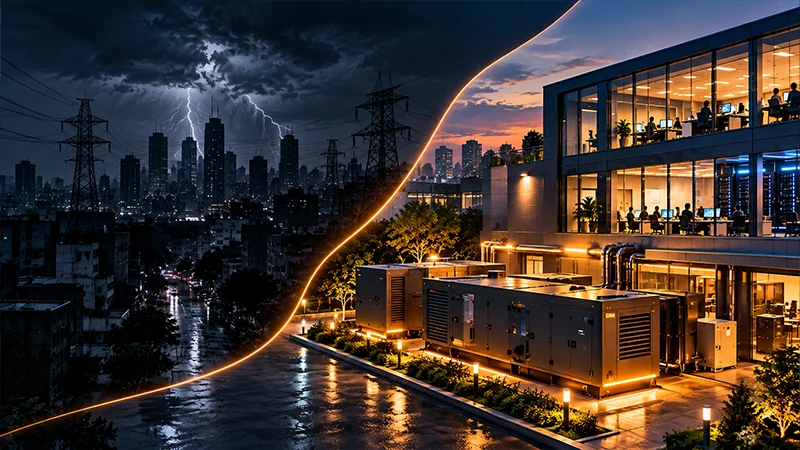
Power outages rarely happen at a convenient time, and when they do occur, the impact can spread through a business far more quickly than many teams expect. One moment, employees are working normally, machines are running, customers are being served, and digital systems are processing information as usual. Then the power disappears, equipment shuts down, internet access may be interrupted, transactions can stop, and essential systems suddenly become unavailable. What looks like a simple loss of electricity can quickly turn into a much larger operational problem.
For some businesses, the immediate effect may be a few lost hours of productivity, but for others, the consequences can be much more serious. Manufacturing lines may stop in the middle of production, refrigerated inventory may begin to warm, servers may shut down unexpectedly, and customer orders may be delayed or lost. Even after power returns, businesses often need additional time to restart systems, inspect equipment, recover data, and get operations moving again.
This is why energy resilience has become such an important part of business planning. It is not simply about keeping the lights on. It is about making sure that the systems, equipment, and services your business depends on can continue operating, or at least recover quickly, when the grid becomes unreliable.
Why Grid Reliability Matters More Than Ever
Modern businesses rely on electricity for almost every part of their day to day operations, which means even a relatively short outage can disrupt multiple areas at once. Computers, communication tools, point of sale systems, production equipment, security systems, heating and cooling, refrigeration, data storage, internet connectivity, and building access may all depend on a stable power supply.
The problem is that businesses have very little control over the wider grid. Power interruptions can be caused by severe weather, damaged infrastructure, equipment failures, utility maintenance, unexpected demand, or local network problems. A business may have excellent internal systems and a strong operations team, but if its entire energy strategy depends on uninterrupted grid power, it still has a major vulnerability.
That raises an important question. If the electricity went out during your busiest operating period, how long could your business continue before the disruption became costly?
For many companies, the answer is not very long. That is why resilience planning is becoming less about preparing for an unlikely emergency and more about managing a realistic operational risk.
Energy Resilience Is About More Than Backup Power
When people hear the phrase energy resilience, they often think first about generators. Generators can certainly be useful, especially for facilities that need emergency power during outages, but true energy resilience goes beyond installing a single backup system and assuming the problem is solved.
A resilient energy strategy is about creating flexibility in how a business receives, produces, stores, and manages power. Depending on the facility and its operational needs, this may involve onsite generation, solar power, battery storage, generators, fuel cells, or microgrid systems that bring several technologies together.
The right solution depends on many factors, including how much electricity the business uses, which systems are essential, how long backup power is needed, how much space is available, and how much the organization is prepared to invest. A small professional office will have very different resilience needs from a large manufacturing plant, cold storage facility, or data center.
The goal is not to install the most technology possible. It is to understand the real risks first, then build an energy system that reduces those risks in a practical and financially sensible way.
The Real Cost of Being Unprepared
The cost of a power outage is often much higher than the value of the electricity that was lost. The real financial impact usually comes from everything that stops working when power becomes unavailable.
Employees may be unable to access critical systems or complete important tasks, which means payroll costs continue while productivity falls. Production lines may need to shut down, sometimes creating waste or requiring additional labor to restart equipment. Retail businesses may lose sales if payment systems cannot operate, while warehouses may face delays in picking, packing, and shipping orders.
There are also equipment and inventory risks to consider. Sudden shutdowns can affect sensitive machinery, computer systems, refrigeration units, and industrial processes that are designed to operate continuously. Businesses that depend on temperature controlled storage may face serious losses if cooling systems remain offline for too long, while companies that rely on digital infrastructure may experience data loss or system recovery problems.
Customer relationships can be affected as well. Customers may not know or care that a disruption was caused by a grid problem. They simply know that an order was delayed, a service was unavailable, or support could not be reached. If outages happen repeatedly, those experiences can slowly damage trust and make customers more willing to consider competitors.
Start by Identifying Your Most Critical Energy Needs
Before investing in new energy equipment, businesses should first understand which parts of their operation need protection most. This usually starts with a simple but detailed review of critical systems, operating requirements, and previous disruptions.
Consider which equipment absolutely must continue running during an outage. For some businesses, that might include servers, security systems, communication tools, emergency lighting, or payment systems. For others, it could include refrigeration, production machinery, ventilation systems, or specialized equipment that cannot be shut down safely.
The next question is how long those systems need to remain operational. A backup system designed to provide power for thirty minutes will look very different from one intended to support essential operations for eight hours or several days.
It is also useful to review what happened during past outages. Which departments were affected first? Which systems created the biggest problems? How long did it take to return to normal operations? What did the disruption cost in lost productivity, damaged goods, delayed work, or customer complaints?
Those answers provide a much stronger foundation for resilience planning because they connect energy decisions directly to real business risks.
Building a More Flexible Energy Strategy
Once a business understands its critical loads, it can begin looking at ways to reduce dependence on a single source of electricity. In many cases, the most resilient approach involves combining several technologies rather than relying on one solution alone.
Solar power can generate electricity onsite during daylight hours, while battery storage can preserve some of that energy for later use. Generators or fuel cells can provide additional support when longer backup periods are needed, and microgrids can help coordinate different energy resources so they work together more effectively.
Businesses exploring distributed energy strategies can also look at how providers such as REC Power approach onsite generation and resilient energy infrastructure when considering what a more flexible power system might involve.
The key is to think about the energy system as a whole. A solar installation may reduce electricity purchased from the grid, while a battery may provide short term backup power. When these technologies are planned together, however, they may create a much more useful and flexible system than either technology could provide on its own.
How Battery Storage Can Support Resilience
Battery storage has become an important part of many resilience strategies because it allows businesses to store electricity and use it when it is needed most. During an outage, batteries can provide temporary power to essential systems, helping businesses avoid an immediate shutdown.
The exact value of battery storage depends on how the system is designed. A smaller battery may be enough to support communications, computers, emergency lighting, or basic control systems, while a larger installation may be capable of supporting more demanding equipment for longer periods.
Battery systems can also provide value during normal operations. Some businesses use batteries to reduce electricity use during expensive peak demand periods, while others pair storage with onsite solar generation so that energy produced during the day can be used later.
The important point is that batteries need to be sized around actual business requirements. Installing a battery without understanding energy demand can lead to a system that is either too small to provide meaningful protection or unnecessarily expensive for the needs of the facility.
Onsite Generation Can Reduce Dependence on the Grid
Onsite generation gives businesses another source of electricity at the location where power is actually needed. This can reduce dependence on the utility grid and create more options when external power becomes unreliable.
Solar energy is one of the most familiar examples, but businesses may also use generators, fuel cells, combined heat and power systems, or other distributed generation technologies depending on their needs.
However, onsite generation does not automatically guarantee resilience. Some systems are designed primarily to reduce electricity costs rather than operate during outages. For example, certain solar installations may automatically shut down when the grid fails unless they are paired with appropriate controls, storage, or backup systems.
That is why resilience needs to be considered during the design stage. If the goal is to maintain essential operations during grid disruptions, the system must be built specifically with that purpose in mind.
Where Microgrids Fit Into the Picture
For businesses with complex or critical energy needs, a microgrid can provide a more coordinated approach to resilience. A microgrid combines different energy resources within one local system and manages how they operate together.
A microgrid might include solar panels, batteries, generators, fuel cells, and utility power. During normal conditions, the system can use those resources in the most practical or cost effective way. During certain outages, it may be able to separate from the wider grid and continue providing electricity to selected parts of the facility.
This kind of setup can be especially valuable for organizations where downtime is extremely expensive or where continuous power is essential. Manufacturing facilities, healthcare sites, data centers, warehouses, cold storage operations, campuses, and critical infrastructure may all have stronger reasons to consider advanced resilience systems.
That does not mean every business needs a full microgrid. In many cases, simpler solutions can provide enough protection. The important thing is to match the technology to the actual level of risk.
Energy Resilience Can Be Built Gradually
One of the biggest misconceptions about resilience is that it requires a complete energy system overhaul from the beginning. In reality, many businesses can improve resilience gradually by focusing first on the areas where outages create the greatest risk.
A company might begin by installing backup power for critical systems, then later add battery storage, onsite generation, or energy monitoring technology. As the business grows or energy demands change, additional capacity can be added over time.
This phased approach can make resilience investments easier to manage and can also help organizations learn more about how their facilities use energy. Instead of making one large decision based on assumptions, businesses can improve their energy systems step by step while measuring what works.
Resilience planning should also be reviewed regularly. A system that was suitable five years ago may no longer meet the needs of a growing operation, especially if the business has added equipment, expanded operating hours, or increased its dependence on digital systems.
Questions to Ask Before Investing
Before choosing a resilience solution, businesses should take time to ask practical questions about their operations, risks, and long term energy needs.
Which systems cannot tolerate downtime? How long do those systems need to remain operational? What did previous outages cost the business? Are there space or infrastructure limits that could affect onsite generation or storage? Would a combination of technologies provide more value than a single solution?
Financing is another important consideration. Some businesses may prefer to purchase and own equipment directly, while others may explore service agreements, leasing structures, or financing models that reduce upfront capital requirements.
There is no universal answer because every facility operates differently. What matters is building a strategy that reflects how the business actually uses energy rather than selecting technology based on trends alone.
Preparing Today Can Make the Next Outage Less Disruptive
No business can control when the next grid outage will happen, but every business can decide how prepared it wants to be when that moment comes.
A strong energy resilience strategy begins with understanding the risks, identifying critical systems, and evaluating which energy resources can provide the right level of protection. For some businesses, that may mean battery storage and backup power. For others, it may involve onsite generation, a microgrid, or a combination of several technologies.
The most important step is simply starting the conversation before an outage forces the issue. Once a business understands where it is vulnerable, it can make better decisions about how to protect operations, employees, customers, and revenue.
When the grid goes down, the goal is not to avoid every inconvenience. The goal is to make sure a temporary power problem does not become a much larger business problem.