


AmpiFire Review 2026: Is AmpCast AI Worth It for Organic Traffic and AI Visibility?
Read our 2026 AmpiFire review covering AmpCast AI pricing, features, 300+ site distribution, customer feedback, AI visibility claims, and whether it is worth the cost.

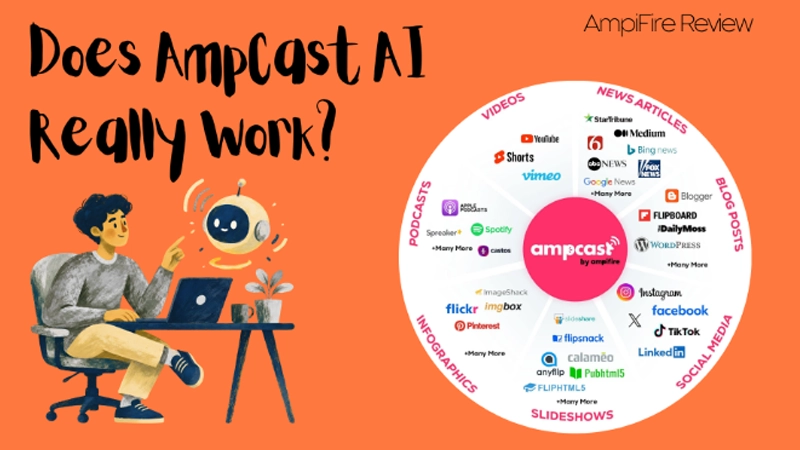
If rising ad costs and inconsistent organic visibility are pushing your team beyond traditional SEO, AmpiFire offers an interesting alternative.
Its AmpCast AI platform turns one topic into multiple formats, including articles, videos, podcasts, reels, infographics, flipbooks, and social posts, with publishing across owned channels and optional distribution through a 300+ site network.
AmpiFire’s value lies in combining content creation, repurposing, publishing, and distribution in one workflow. It can be useful for teams struggling to produce content consistently, but it is better viewed as a long-term visibility platform than a shortcut to guaranteed rankings or AI citations.
AmpCast AI turns one topic into multiple content formats for publishing across owned channels and external platforms.
Key Takeaways
- AmpiFire’s AmpCast AI turns one topic into eight content formats, including blogs, news articles, videos, podcasts, reels, infographics, flipbooks, and social posts.
- Current AmpCast AI plans start at $97 per month, with Pro at $197 and Scale at $297.
- Publishing to a brand’s own website and connected social channels is included, while distribution through AmpiFire’s 300+ site marketplace uses separate distribution options or credits.
- AmpiFire publishes strong customer case studies, but its most impressive traffic and revenue figures are company-reported rather than independently audited.
- AmpCast can increase the amount of content surrounding a brand, but rankings and citations from ChatGPT, Gemini, Google AI, or other independent platforms cannot be guaranteed.
- For B2B organizations, Valasys AI Score (VAIS) addresses another part of the growth problem by helping teams identify and prioritize accounts based on fit, buyer intent, and account intelligence.
Is AmpiFire a Legit Organic Traffic and Content Distribution Platform?
Yes. AmpiFire is a legitimate content creation and distribution platform with publicly available products, pricing, customer case studies, and third-party reviews.
Its flagship AmpCast AI platform is designed around “multicasting”: taking one buyer-focused topic and transforming it into multiple types of content instead of producing only a single article.
AmpCast currently supports eight formats: long-form video, podcast episodes, news articles, blog posts, reels or short-form videos, infographics, flipbooks, and social posts.
That gives AmpiFire a clearer differentiation from general-purpose AI writing tools. Its proposition is not simply to generate text. It attempts to combine research, creation, repurposing, publishing, and distribution within one workflow.
The supplied AmpiFire material describes this as a three-stage process covering research, creation, and distribution, with the company claiming that a complete multi-format campaign can be produced in around 20 minutes.
Whether that speed translates into comparable business results depends on content quality, editing, strategy, market competitiveness, and how consistently campaigns are published.
But creating visibility is only one part of the B2B growth process.
Once content is attracting attention and buyers are researching solutions, revenue teams still need to determine which accounts are worth prioritizing and when sales should engage them.
That is where Valasys AI Score aka VAIS, takes a different approach.
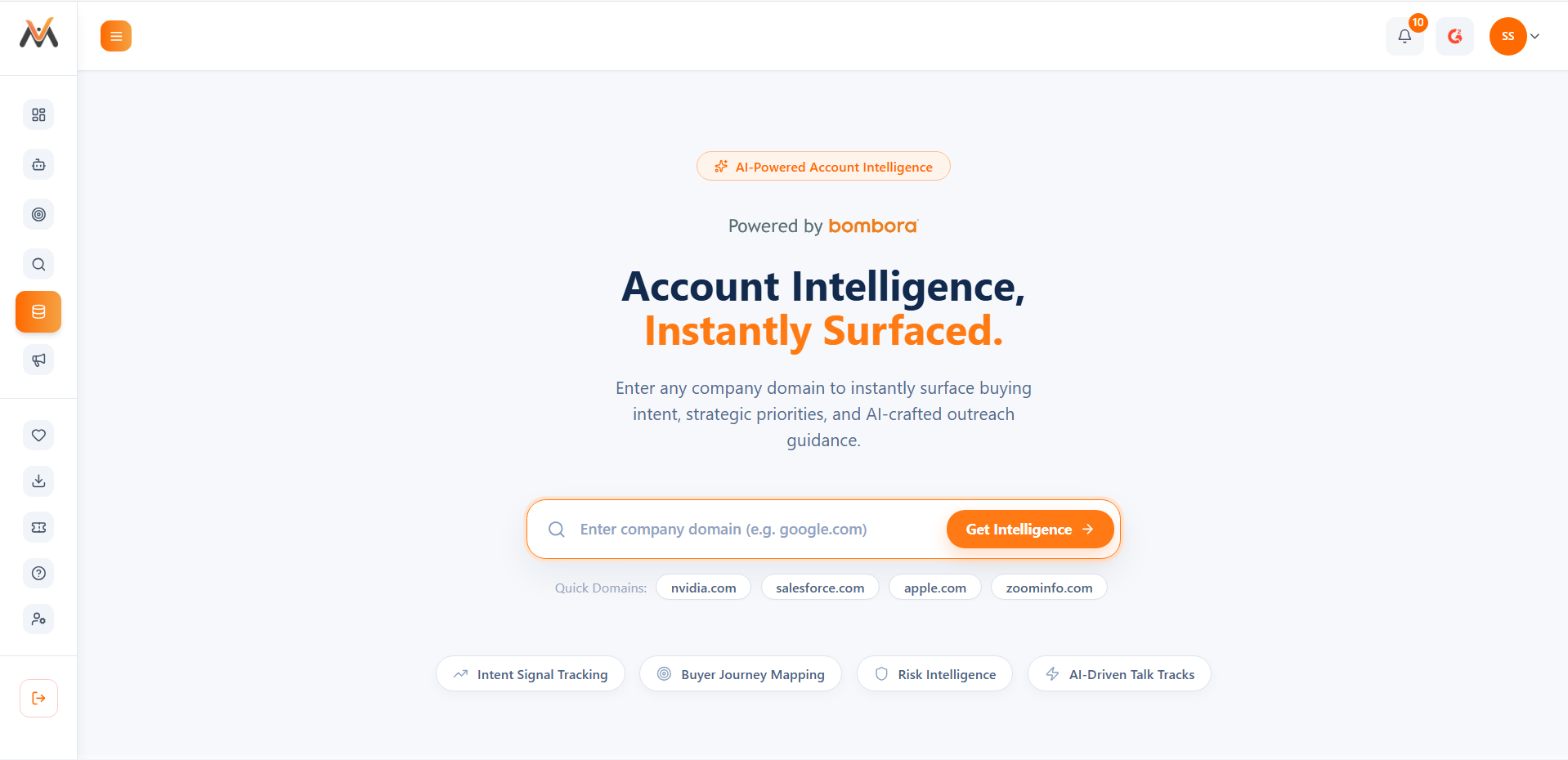
VAIS combines AI-driven scoring with firmographic information and Bombora buyer-intent signals to help B2B teams identify and prioritize accounts. Valasys has also expanded VAIS with Account Intelligence, which interprets account-level intent activity and turns those signals into structured sales context.
AmpiFire focuses on expanding content visibility. VAIS focuses on identifying which B2B accounts may deserve sales attention.
Discover High-Intent Accounts With VAIS →
How Does AmpCast AI Work?
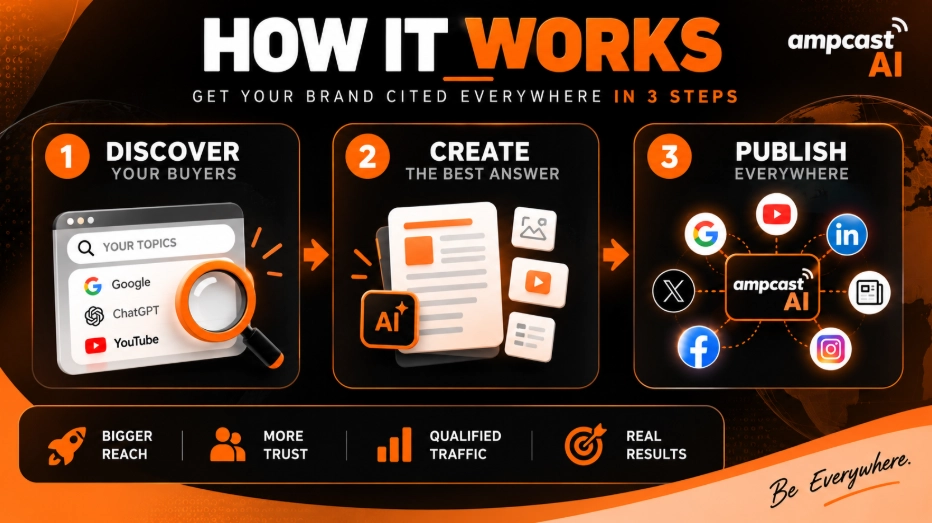
1. Research Buyer-Focused Topics
Users can begin with a topic or provide AmpCast with a product page, article, website, video, or competitor URL.
The platform is designed to find questions and topics that potential buyers may investigate during their research journey.
2. Create Multiple Content Formats
AmpCast repurposes the core subject into content suited to different channels.
Instead of asking a marketing team to separately create a blog, podcast, YouTube video, infographic, and social campaign, the platform builds several assets from the same central topic.
AmpiFire claims a full multi-format campaign can take around 20 minutes to produce. Its supplied material compares this with substantially longer manual production workflows.
That should be viewed as an AmpiFire-reported production estimate. Actual time will depend on how much fact-checking, editing, brand approval, and human review an organization requires.
3. Publish and Distribute
AmpCast can publish to a company’s own website and connected social channels.
Its current plans advertise unlimited posting to owned websites and social accounts, while access to the wider 300+ site distribution marketplace is available separately.
This distinction is important because the AmpCast subscription itself does not necessarily represent the complete cost of running externally distributed campaigns.
How Much Does AmpiFire Cost?
AmpCast AI currently advertises three self-service monthly plans:
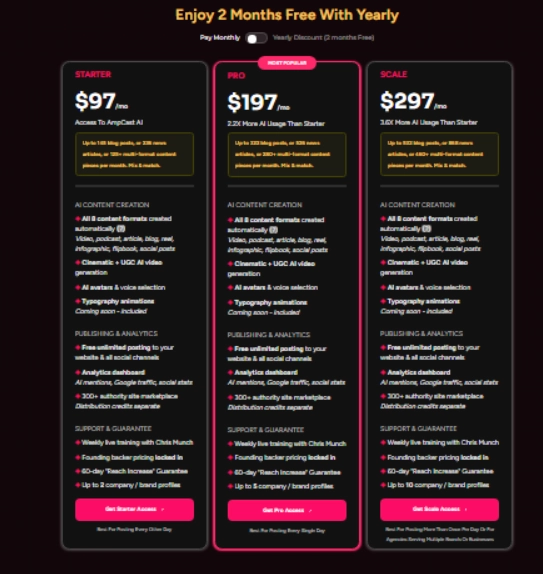
Starter currently supports up to two brand profiles, Pro up to five, and Scale up to ten, with progressively higher AI usage allowances. All three advertise access to the eight content formats, publishing functionality, analytics, and the 300+ site marketplace, although marketplace distribution credits are separate.
That makes the pricing reasonably straightforward at the software level. However, buyers should calculate the full cost around their intended usage.
AmpCast subscription + external distribution + any additional content or service requirements = actual campaign cost.
A business planning to distribute frequently across AmpiFire’s external network could therefore spend more than the headline $97, $197, or $297 subscription price.
Does AmpiFire Actually Work?
AmpiFire publishes several case studies reporting strong organic traffic and revenue outcomes.
Its supplied review highlights a fitness equipment business where approximately $5,000 per month in content was reported to generate around $307,500 per month in sales, alongside roughly 41,000 monthly blog visits. AmpiFire describes this as a 61.5x return on content spend.
Other examples in the supplied material include a furniture business reporting a 417.8% increase in organic traffic and a wine retailer reporting approximately 1,100% blog growth over 21 months.
Those figures are impressive, but there is an important distinction for buyers.
Most of AmpiFire’s strongest performance statistics come from AmpiFire-published case studies rather than independent performance audits.
That does not make them invalid. Case studies demonstrate what particular businesses reportedly achieved. They simply should not be interpreted as guaranteed benchmarks for every customer.
AmpiFire itself acknowledges in its supplied material that results vary and organic content growth requires time and consistency.
Can AmpiFire Get Your Brand Cited by ChatGPT or Google AI?
Potentially, but not automatically.
AmpCast’s current positioning strongly emphasizes AI visibility and the idea that appearing consistently across multiple authoritative sources can improve a brand’s chances of being surfaced by AI platforms.
Increasing the amount of useful information available about a company can logically create more opportunities for discovery.
However, AmpiFire does not control ChatGPT, Gemini, Google AI Mode, Copilot, or other independent answer engines.
Publishing across more platforms therefore should not be interpreted as a guarantee that a specific AI system will cite or recommend a company for a particular query.
A more accurate expectation is:
AmpCast may increase opportunities for AI discovery and citation by expanding a brand’s relevant content footprint, but individual citations are not guaranteed.
What Do AmpiFire Customers Say?
Third-party customer feedback is generally positive.
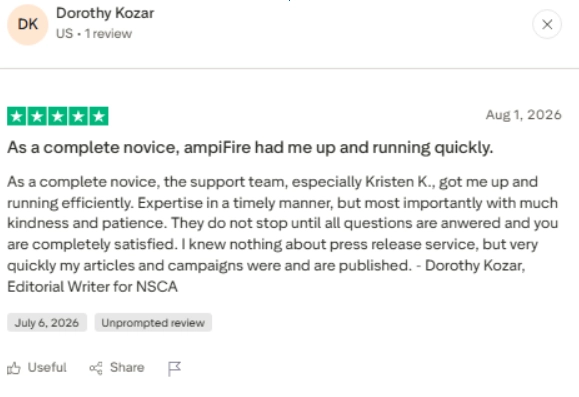
★★★★★
Aug 1, 2026
As a complete novice, ampiFire had me up and running quickly.
As a complete novice, the support team, especially Kristen K., got me up and running efficiently. Expertise in a timely manner, but most importantly with much kindness and patience. They do not stop until all questions are answered and you are completely satisfied. I knew nothing about press release service, but very quickly my articles and campaigns were and are published. – Dorothy Kozar, Editorial Writer for NSCA
July 6, 2026 Unpromoted review
Useful Share
Trustpilot currently shows AmpiFire at 4.7 out of 5 from 35 reviews, with several recent reviewers specifically praising customer support and responsiveness.
This is useful when judging customer experience, but review-site ratings should not be confused with proof of organic traffic, revenue, or AI visibility performance.
The same principle applies to any marketing platform: customer satisfaction tells buyers something important about service quality, but campaign performance needs to be assessed separately.
AmpiFire Pros and Cons
| Pros | Cons |
|---|---|
| Turns one topic into eight formats | External distribution costs extra |
| Combines creation and publishing | Organic results require time |
| Reduces manual repurposing | Rankings cannot be guaranteed |
| Supports multiple content channels | AI citations cannot be guaranteed |
| Useful for agencies and multi-brand teams | Strongest ROI evidence is company-reported |
| Own-site and social publishing included | Human review and strategy are still required |
Who Is AmpiFire Best For?
AmpiFire is most compelling for e-commerce brands, agencies, local businesses, and lean marketing teams that already understand the value of content but struggle to produce enough of it consistently.
It is particularly relevant where buyers conduct substantial research before making a purchase, giving brands opportunities to answer questions across written, visual, audio, video, and social formats.
It may be less suitable for companies that need immediate traffic, primarily rely on paid advertising, expect guaranteed rankings, or are purchasing solely in the expectation that ChatGPT will begin recommending their brand.
Content distribution can amplify a strong marketing strategy. It cannot replace one.
Turn Buyer Signals Into Account Priorities
AmpCast can help organizations expand the number of places where buyers encounter their content.
For B2B companies, the next challenge is deciding which organizations demonstrating interest deserve sales attention first.
VAIS addresses this by combining account scoring with buyer-intent signals and Account Intelligence. Its Account Intelligence capability evaluates account activity, organizes related intent topics, and applies AI to generate context around buyer stage, potential priorities, relevant personas, and possible next actions.
In practical terms:
AmpCast can help expand your content presence.
VAIS can help your revenue team decide which B2B accounts to investigate and prioritize.
For organizations running account-based marketing or intent-led demand generation, visibility and prioritization can therefore serve complementary roles in the broader buyer journey.
Turn Buyer Intent Into Sales Intelligence With VAIS →
Final Verdict: Is AmpiFire Worth It?
AmpiFire is best understood as a multi-format content creation and distribution platform, rather than simply another AI writing tool.
Its strongest advantage is operational: taking one commercially useful topic and turning it into several assets that can be published across different channels without coordinating a separate production process for each format.
Its biggest limitation is expectation management.
Organic traffic takes time. Distribution across the full external network adds to the effective cost. Company case studies should not be treated as guaranteed outcomes, and independent AI systems ultimately decide what they cite.
For businesses whose biggest bottleneck is consistently creating and distributing useful content, AmpiFire is worth considering.
For B2B revenue teams, however, content visibility is only part of the equation. Platforms such as VAIS address the separate question of which accounts are showing meaningful buying signals and where sales resources should be focused.
Verdict: AmpiFire is worth considering for brands and agencies serious about long-term multi-channel organic visibility, provided they understand the full distribution cost and maintain realistic expectations around rankings and AI citations.
Frequently Asked Questions
1. How much does AmpCast AI cost?
Current monthly plans are $97 for Starter, $197 for Pro, and $297 for Scale. External distribution through the 300+ site marketplace is separate.
2. Does AmpCast distribute content to 300+ sites?
AmpiFire provides access to a 300+ site distribution marketplace, but distribution credits are separate from the standard subscription. Publishing to owned websites and connected social channels is included.
3. Can AmpiFire guarantee ChatGPT citations?
No. AmpCast may increase opportunities for discovery by creating a broader content footprint, but an independent AI platform ultimately determines which sources it cites.
4. What is the difference between AmpiFire and Valasys Media?
AmpiFire primarily focuses on content creation, repurposing, publishing, and distribution. Valasys Media’s VAIS focuses on B2B sales intelligence, account scoring, buyer intent, and account prioritization.
Disclaimer: Product features, prices, ratings, and distribution options may change. Customer case studies represent reported individual outcomes and should not be interpreted as guaranteed performance. Valasys Media publishes this review and offers VAIS, a B2B sales intelligence and account-prioritization platform.

