
NVIDIA Announces Vera Rubin Platform and NemoClaw AI Agent Toolkit at GTC Taipei
NVIDIA introduced the Vera Rubin platform and NemoClaw AI agent toolkit at GTC Taipei, advancing AI infrastructure and agent development.

June 1, 2026 – Jersey City, N.J.
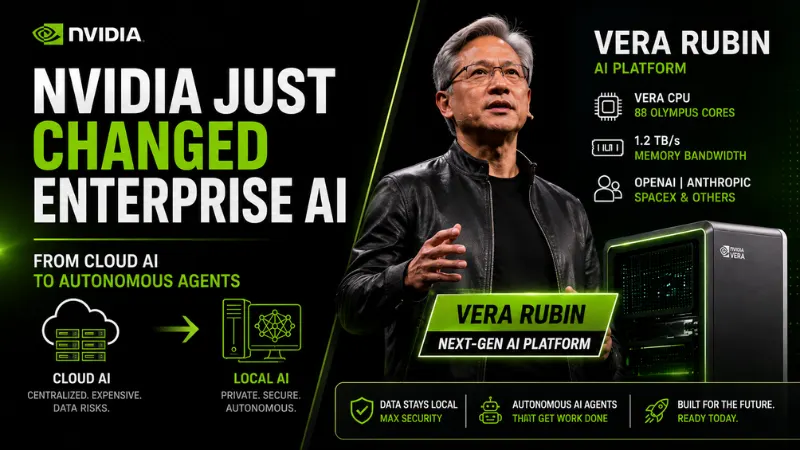
NVIDIA introduced its upcoming Vera Rubin computing platform and a new open-source AI agent infrastructure suite during its GTC Taipei 2026 Keynote, outlining updates focused on enterprise AI deployment, infrastructure, and computing systems.
During the event, NVIDIA Chief Executive Officer Jensen Huang presented the Vera Rubin platform, which the company said has entered production. According to technical specifications published by NVIDIA, the platform includes a new Vera CPU configured with 88 Olympus cores and memory bandwidth of up to 1.2 terabytes per second.
NVIDIA announced that organizations including OpenAI, Anthropic, and SpaceX are expected to use the platform for AI development, simulation, and engineering workloads.
The company also presented systems based on its Grace Blackwell architecture, including desktop and server configurations designed to support AI training and inference workloads in enterprise environments.
Alongside the hardware announcements, NVIDIA introduced its Agent Toolkit, which includes NemoClaw blueprints and frameworks. NVIDIA said the toolkit is designed to help developers build and manage AI agent systems within enterprise environments while maintaining control over data and infrastructure.
According to NVIDIA, organizations including SAP, Siemens, and General Motors’ Cadillac division are using the technology to support engineering and operational processes. The company also cited adoption by CrowdStrike and Palantir Technologies for cybersecurity-related use cases.
NVIDIA highlighted technologies designed to support AI deployments within enterprise-controlled environments. Industry organizations, including the International Association of Privacy Professionals (IAPP), have identified data governance, regulatory compliance, and information security as important considerations for organizations expanding AI initiatives.
Why This Matters
For enterprise technology leaders, the announcements highlight infrastructure and software options designed to support AI adoption while addressing data governance, compliance, and operational control requirements. As organizations evaluate AI deployments across business functions, infrastructure decisions remain closely tied to security and governance considerations.